Friday, October 13, 2023

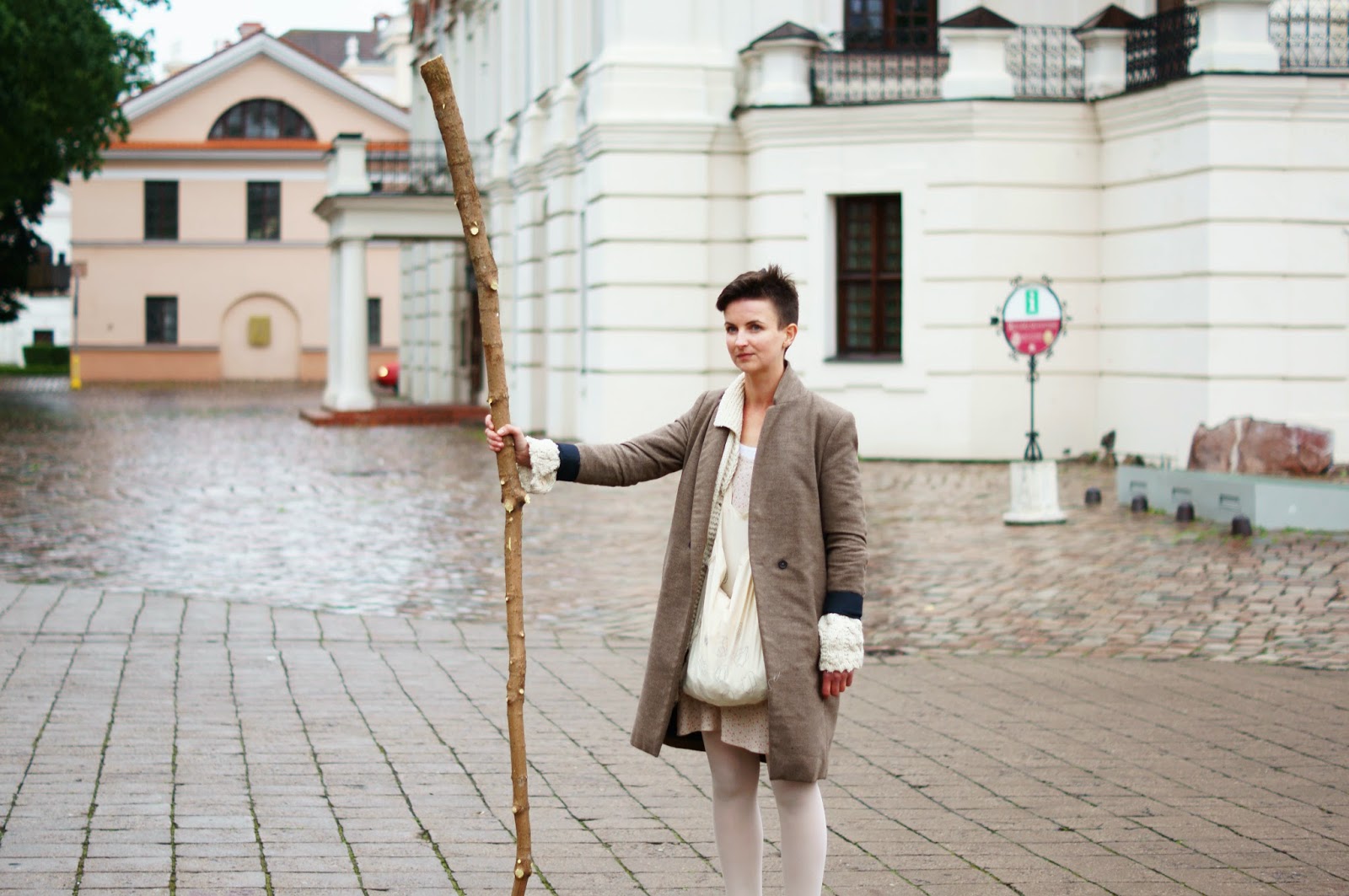
Still from the video "Damn Rake" (2023)

Still from the video "Fight Back/Leave It There" (2023)

Fragment from the installation "Damn Rake" (2023)


DAMN RAKE. VERDAMMTER RECHEN. KURADI REHA

Performing German language studies as a journey through psychic processes in relation to colonial history of the Baltics and the notion of (dys)functional hybridity.

Project in process. 

First showing in the exhibition "Linguistic Xpedition"October 28, 2023 – March 31, 2024 at the project space of the URBAN NATION Museum, Berlin. Curated by Janine Arndt

Online showcase:

Video

Text and visual


Friday, May 26, 2023


Goodbye East! Goodbye Narcissus!
15.04. - 04.06.2023 at EKKM, Tallinn

With 
Aliaxey Talstou, Elo Liiv, Holger Loodus, Kateryna Lysovenko, 
Kirill Tulin, Paulina Pukyte and Svitlana Biedarieva

Text collection available here

Photo reportage here

Monday, June 29, 2020


Siberian Childhood
curated in collaboration with SLED group.

Tuesday, September 25, 2018


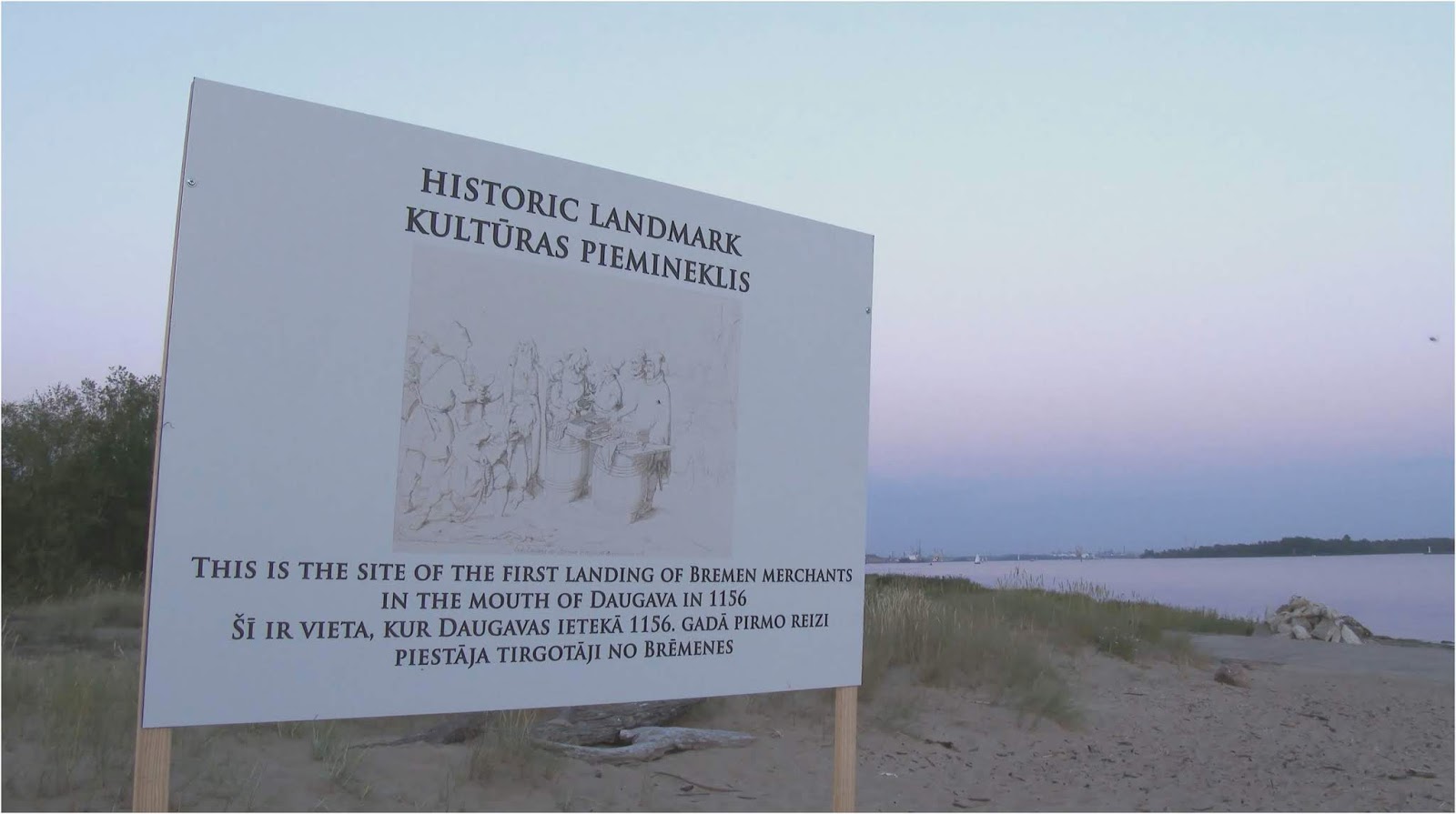
Still from the video "The Mouth of Daugava" (Tanel Rander, 2018)

https://vimeo.com/290014952

https://lcca.lv/en/events/laikmetigas-makslas-izstade--kopiga-vesture-/


The Mouth of Daugava

Friedrich Ludwig von Maydell (1795 – 1846) was a Baltic-German artist, based in the region that is now known as Estonia. He produced series of graphic works that depicted the history of Germans in the eastern shores of the Baltic sea. Those works were published in albums, titled as “Fifty Images from the History of Russia’s German Baltic Provinces”. Here you are witnessing one of these albums, borrowed from the collection of the Art Museum of Estonia. More precisely, you are witnessing the work that the artist depicts as the starting event of the history of the Baltic states – “First Landing of the Bremen Merchants at the Mouth of the River Daugava. 1156” (1839).

Most of all, this work speaks about the gaze of the artist as the subject of the modern era, also as the member of the privileged class in the society based on slavery. This gaze over the history is similar to the numerous images that depict the landing of Christopher Columbus in the Caribbean islands. Maydell portrays the encounter between the Bremen merchants and the local natives as the act of trade. The image contains some details that refer to the elements known from the history of European colonialism. Please find these elements from the image and read the explanations added by me.

a) Alcohol – the establishment of the system of dependency and control, used by colonial powers.
b) Furs – natural resources and raw materials that are needed by colonizers in places inhabited by natives.
c) Mirror – the establishment of the system of representation and validation, also the production of identity, history, knowledge and subjectivity.
d) Trade beads – the establishment of the medium of exchange.

The area around the mouth of Daugava should be preserved as public space and the site should be celebrated as the historical landmark of colonial history in the Baltics.


Saturday, September 15, 2018

A MOLE, LARGER IN SIZE THAN EVER SEEN BEFORE

22.08. - 16.09. in Brivibas galerija, Valgka


Tuesday, May 8, 2018


Brīvības galerija
("brivibas" in Latvian = "freedom" in English)
Art space and research project
 From April to October 2018 it was located at 
Vabaduse 14, Valga/Valka,
the border town between Estonia and Latvia.
("vabaduse" in Estonian = "brivibas" in Latvian)

exhibitions and events: 
April - solo exhibition "Weird feeling" by Alexei Gordin
June - nameless exhibition by Juka Käärmann and Hülle Haab
July - open studio of Hanna Samoson
August - Tanel Rander's curator project "A Mole, Larger in Size Than Ever Seen Before"

The building at Vabaduse 14, Valga is where the family of Hella Wuolijoki and Salme Dutt used to live in the late 19th century.


Friday, November 4, 2016


PROMISED LIGHT
Gallery Noorus 13.10. - 29.10.2016
Tartu Art House 20.10. - 13.11.2016
Anna Salmane and Krišs Salmanis (Latvia), Bence György Pálinkás (Hungary), Berat Işık (Turkey), David Kellner (Austria), Diana Tamane (Estonia/Latvia), Jevgeni Zolotko (Estonia), Matija Plevnik (Slovenia), Rapolas Valiukevičius and Aukstasis Moxlas (Lithuania) and Terje Toomistu (Estonia)


Archives and Disobedience. Changing Tactics of Visual Culture in Eastern Europe
Edited by Margaret Tali and Tanel Rander
Estonian Academy of Arts Press, 2016


more info:


Wednesday, August 10, 2016


THIRD WAY
Solo exhibition by Tanel Rander
Tallinn City Gallery
12.08. - 11.11.16


(photos by Karel Koplimets/Tallinna Kunstihoone)

Sunday, February 1, 2015


HOW TO READ IN THE DARK?
22.01. - 15.03.2015 in Joensuu Art Museum, Finland
08.05. - 31.05.2015 in Tartu Art House, Estonia
20.06. - 26.07.2015 in Grimmuseum, Berlin, Germany
Merja Briñón, John Court, Tom Engblom, Anssi Hanhela, Irina Havaste-Ukkola, Markku Heikkilä, Helena Junttila, Ninni & Tuomas Korkalo, Eero Kumpula, Kalle Lampela, Esa Meltaus, Sauli Miettunen, Pirkko Mäkelä-Haapalinna, Outi Pieski, Mark Roberts & Minna Rainio, Elina Sipilä, Kari Tuisku, Juhani Tuominen
curated by Tanel Rander

catalogue:

Thursday, November 27, 2014


WAITING FOR THE GRAY SHIP
In Y Gallery (Jakobi 1, Tartu) 15.10. - 09.11.2014

Artists: Anna Hints, Jass Kaselaan, Karolina Kubik (Poland), Evi Pärn, Krišs Salmanis (Latvia), Eva Sepping, Toomas Thetloff, Maria Vous
Curated by Tanel Rander

More info: http://ygalerii.blogspot.com/2014/10/halli-laeva-oodates-15-okt-9-nov-2014.html

Video guide: https://www.youtube.com/watch?v=TnzrSCEuTEc


COLONIAL WOUND
performance by Karolina Kubik and Tanel Rander
Creature Live Art 2014, Kaunas
https://www.youtube.com/watch?v=mMoZ-KXrgMQ


(photos by Creature Live Art festival)

COLONIAL WOUND, SOLIDARITY AND EASTERN EUROPE
discussion in 17.10.2014
 UP Gallery, Berlin


COLONIAL WOUND

Documentation of performance by Karolina Kubik and Tanel Rander, 31st of May 2014 in Kaunas. 150 plates of mamaliga were symbolically served, referring to 150 NATO soldiers sent to each Baltic state. Mamaliga is a cheap East European peasant food, now mostly forgotten, but known as polenta, through the global marketing of Italian cuisine. Beside mamaliga, 150 stones were served. This serving was followed by struggle with car, its Polish registration plate was covered with military camouflage. The anonymous and militarized civil car was pushed by Tanel Rander, while Karolina Kubik stopped it with a wooden stick. Mamaliga, stones and sticks is what we have. We want to discuss how to use them!

Colonial wound is what unites Eastern Europe and the former 3rd world. Colonial wound is what makes a difference between the East and the West. As coloniality affects people, it affects places. The wound includes human body and its location, and has different layers.

Layer 1: We come from Eastern Europe that occurred after the collapse of the Berlin Wall as a huge post-catastrophic space, facing underdevelopment, radical reforms, wars, instability.

Layer 2: After 2004, when most of the Eastern countries joined the EU, this reality was forgotten. Eastern Europe became “the former East”, a white and civilized area, acting like Western countries, using foreign labor, participating in the Western war machine, behaving as superior power in respect of this Eastern Europe that was left outside the EU.

Layer 3: Since 2014 Eastern Europe is back. Nobody uses the term “the former East”, when talking about sending NATO troops to the Baltics, Poland and Romania. War in Ukraine is called as “war in Europe”. The fear of war and death is now a reality in Eastern Europe.

We want to raise the following questions:

What is the task of culture and arts, while the society is being militarized, while politicians and the elite are turning people against each other? No doubt that the imperial war machine is expanding in the East and in the West. What is the task of us, artists? What should happen in art galleries during such situation?
We want to develop the culture of solidarity! Eastern Europe has been spectralized – there are single countries, that don't notice each other. It is a set of dependancy between the East and the West that works through singularity. There is war in the place, where we live – the post-Socialist politicians have failed. The imperialist politics has failed. How strong is the culture? Are we producing illustrations for imperialist politics and global coloniality?
Russian artists – our countries, your politicians and ours are turning people against each other. And not only – our countries are being militarized, as if there are preparations for huge war. What can we do about it? Where is the cultural response that stands for humanity? Dadaism is not the way out of it.    


EAST/WEST/THIRD OPTION?
transnational guerilla art school seminar and film program
curated by Tanel Rander
managed by Fundacija Sonda
presentations by Andrej Kurnik, Ivan Jurica, Tanel Rander, Vesna Vuk Godina
21. - 23.03.2014 Udarnik Cinema, Maribor
extra presentation by Roland Bolz in GT 22
More info: http://tgas2014.wordpress.com


Friday, December 27, 2013

Monday, November 25, 2013


OH MY GOD
Karl Saks/Hendrik Kaljujärv/Tanel Rander

Physical theatre. 

31.10. - 23.11.2013 in Von Krahl Theatre, Tallinn
Performers: Liis Lindmaa, Mari Pokinen, Ragne Veensalu, Loore Martma, Ivo Reinok, Madis Mäeorg, Tõnis Niinemets
Art Director: Maaria Treima


Monday, August 26, 2013


MAN OVERBOARD
performance by 10x10m on 21-st and 22-nd of August 2013, August DanceFestival, Tallinn

(photo by Kaur Ilves)
March 28th 2012 an anonymous Estonian immigrant was on his way home, from Helsinki to Tallinn. 10 minutes after the departure of the ferry he jumped overboard into freezing sea. The rescue boats and helicopters couldn't find him. He was thought to be dead. Three weeks later he appeared to be alive and returned back home. What happened to him during  those three weeks? This is a mystery that needs to be solved, in order to re-articulate the borders between the East and the West and re-think the capitalist vocabulary imposing the meaning of human life. Keywords: an empty island, an empty summer house, potato chips, a miracle. 


Authors: members of 10x10 meters - Epp Kubu, Eva Labotkin, Mai Sööt, Villem Jahu, Andrus Lauringson, Tanel Rander & Ieva Kauliņa (Riga)
Supporter: Cultural Endowment of Estonia
Co-producer: Kanuti Gildi SAAL
Residency: Gertrudes ielas teatris, Riga
Realised in the frames of FIT network collaboration Global City - Local City project funded by Culture Program of EU.